 admin
admin Cosmetic Lami tubes are widely used for packaging creams, lotions, gels, cleansers, masks, and other personal care formulations. Their multilayer construction provides a balance of flexibility, product protection, and attractive presentation. However, the tube body is only one part of the packaging system. Proper sealing is essential to prevent leakage, maintain product quality, and protect the contents during transportation and everyday use.
The sealing process generally takes place after the tube has been formed and filled with the cosmetic product. Depending on the tube design and manufacturing equipment, different techniques can be used to create a secure bottom seal.
Preparing the Tube for Filling
Cosmetic Lami tubes are manufactured as multilayer structures, commonly using plastic-based materials and barrier layers. The tube body is formed into a cylindrical shape and joined along its length to create a continuous tube.
Before filling, the open end of the tube is positioned in the filling equipment. The cosmetic formulation is then introduced into the tube while maintaining controlled production conditions.
The amount of product inserted depends on the selected tube capacity and the manufacturer’s filling specifications.
Heat Sealing
Heat sealing is one of the common methods used to close laminate tubes. In this process, controlled heat is applied to the open end of the tube. The heat softens compatible thermoplastic layers, allowing them to bond together when pressure is applied.
After the required sealing temperature and pressure are achieved, the sealed section is cooled and stabilized. This creates a closed end that helps keep the cosmetic formulation securely inside the package.
The temperature, pressure, and sealing time need to be carefully controlled. Excessive heat can potentially affect the tube material or product, while insufficient heat may result in an incomplete seal.
Ultrasonic Sealing
Some laminate tube applications can use ultrasonic sealing technology. Instead of relying primarily on external heating, ultrasonic equipment uses high-frequency mechanical vibrations to generate localized heat at the sealing area.
This technique can provide a clean and controlled seal and may be suitable for particular tube constructions and production requirements. The exact process depends on the materials used in the laminate and the specifications of the filling line.
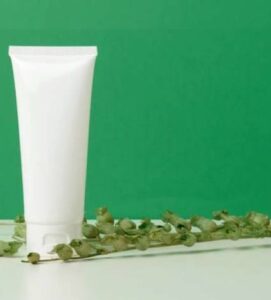
Creating a Reliable Bottom Seal
The bottom seal has an important role in the overall packaging performance. It needs to withstand normal handling, transportation, storage, and consumer use without opening or leaking.
During manufacturing, the sealing equipment is adjusted according to factors such as tube material, thickness, dimensions, and production speed. The sealed area may also be trimmed or shaped to create a neat appearance.
A well-formed seal provides both functional security and an attractive finish.
Tube Shoulder and Cap Assembly
The opposite end of the tube is generally connected to a shoulder and dispensing opening. Depending on the tube design, the shoulder can be manufactured as part of the tube structure or assembled with the tube body.
A suitable cap is then fitted to the dispensing end. Flip-top, screw, and other closure styles may be selected according to the cosmetic product and consumer requirements.
The cap and shoulder work together to protect the opening and provide convenient dispensing.
Quality Checks After Sealing
Quality control is an important part of the cosmetic tube sealing process. Manufacturers may inspect sealed tubes for visible defects, incomplete bonding, wrinkles, contamination, or other irregularities.
Leak testing and seal-strength evaluation can also be performed to confirm that the package remains secure under expected handling conditions.
Testing is especially important because cosmetic products can have different viscosities and formulations that may influence filling and sealing performance.
Why Proper Sealing Matters
A reliable seal helps protect the cosmetic product from leakage and unnecessary environmental exposure. It also provides confidence during transportation and storage.
For consumers, a properly sealed tube is easier to use and less likely to create messes in handbags, bathrooms, travel kits, or retail packaging. For manufacturers, consistent sealing helps reduce product loss and maintain packaging quality.
Conclusion
Cosmetic Lami tubes can be sealed using techniques such as heat sealing and, for suitable constructions, ultrasonic sealing. After the cosmetic formulation is filled into the tube, the open end is sealed under controlled conditions to create a secure package.
The quality of the final seal depends on the laminate structure, sealing method, temperature, pressure, equipment settings, and manufacturing controls. When these factors are properly managed, Lami tubes can provide reliable, attractive, and convenient packaging for a wide variety of cosmetic products.